
Search
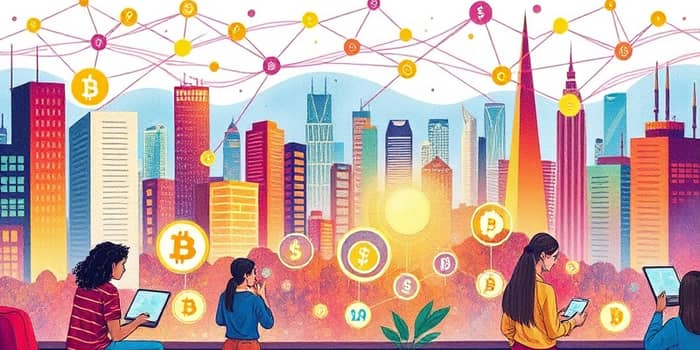
Imagine a world where financial services are open to everyone, free from the gatekeepers of traditional banks. This is the promise of Decentralized Finance, or DeFi, a transformative movement built on blockchain technology.
It represents a financial renaissance that challenges the status quo, offering unprecedented access and innovation.
By leveraging smart contracts on networks like Ethereum, DeFi enables peer-to-peer transactions without intermediaries, creating a more inclusive economic system.
DeFi is a blockchain-based ecosystem of financial products and services that operates without central authorities. It uses programmable networks to facilitate activities like lending, borrowing, and trading through decentralized applications (DApps).
This system is built on immutable digital records and open-source protocols, ensuring transparency and security. Key characteristics include self-hosted custody and composable architecture.
These features allow users to retain control over their assets while accessing a wide range of financial tools. DeFi is not just a trend; it's a fundamental shift towards democratizing finance.
DeFi emerged from the foundational blockchain technologies popularized by Bitcoin. However, it expanded with programmable platforms like Ethereum, which enabled complex financial functions.
Driven by developer communities, DeFi has evolved into a robust ecosystem. It challenges centralized finance (CeFi) by offering modular applications on permissionless chains.
This evolution signifies a move towards global interoperability between blockchains and traditional systems. The journey from simple transfers to sophisticated financial services highlights its growing impact.
The DeFi ecosystem is rich with interconnected protocols designed for various financial needs. These products empower users to engage in activities that were once limited to institutions.
Each product contributes to a composable financial stack that users can mix and match. This flexibility drives innovation and accessibility in the space.
DeFi fundamentally differs from centralized finance (CeFi) and even Bitcoin in its approach and capabilities. Understanding these differences is crucial for navigating the ecosystem.
While CeFi relies on intermediaries for asset management, DeFi operates through smart contracts and user wallets, giving individuals direct control.
Bitcoin, though revolutionary, focuses primarily on simple transfers and store of value, lacking the programmability of DeFi.
This comparison highlights how DeFi empowers users with greater autonomy and innovation.
DeFi offers numerous benefits that can inspire and transform how we interact with finance. These advantages make it an attractive option for users worldwide.
These benefits underscore the potential of DeFi to democratize finance and enhance economic participation.
While DeFi holds great promise, it also comes with unique risks that users must understand and mitigate. Awareness is key to safely engaging with this innovative space.
Smart contract exploits can lead to significant losses, as code bugs are immutable and not easily recoverable.
Impermanent loss affects liquidity providers in automated market makers, while market volatility impacts collateral and liquidations.
To mitigate these risks, users should opt for audited protocols and use tools like private relays. Practical steps include diversifying investments and staying informed on regulatory developments.
DeFi is poised to disrupt traditional finance by offering inclusive alternatives in lending, payments, and more. Its future depends on balancing innovation with safety and compliance.
Transformative potential lies in areas like peer-to-peer lending and global access, but risks require adaptive strategies.
Regulatory approaches are evolving, with a focus on risk-based frameworks and international coordination. Users have responsibilities such as wallet screening and adhering to local laws.
This landscape encourages proactive engagement, empowering users to shape a fairer financial system.
For those inspired to explore DeFi, taking practical steps can ensure a safe and rewarding experience. Start by educating yourself and using trusted resources.
Begin with small investments in well-known protocols like Uniswap or Aave, and always use a secure wallet. Research each product thoroughly to understand its risks and rewards.
Engage with community forums and stay updated on security audits and regulatory news. By adopting a cautious approach, you can harness the power of DeFi to achieve your financial goals.
Remember, the journey into decentralized finance is about empowerment and innovation, paving the way for a more accessible economic future.
References