Search
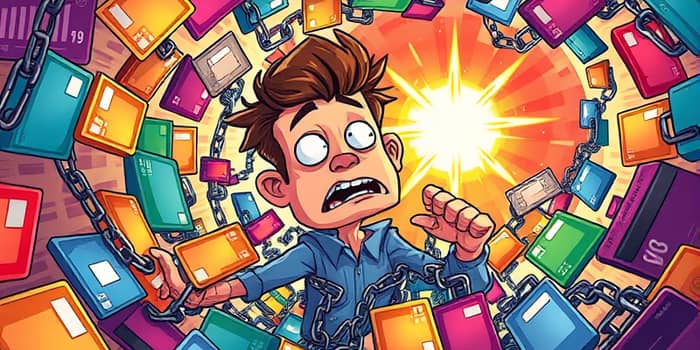
In today's financial landscape, the **minimum payment trap** is ensnaring more Americans than ever before. With record highs in minimum payments, consumers are unknowingly signing up for decades of debt.
This trend is not merely a personal finance issue; it's a **societal red flag** indicating widespread economic strain. As inflation and high rates pressure budgets, the temptation to pay only the minimum grows stronger.
However, this approach can lead to **hundreds or thousands in extra interest**, turning a small balance into a financial burden. By understanding the mechanisms at play, you can avoid this costly mistake.
Recent data paints a stark picture of the minimum payment epidemic. In Q3 2024, 10.75% of credit card customers paid only the minimum, the highest rate since 2012.
This number has risen sharply since 2021, reflecting **post-pandemic economic challenges**. Over 11% of Americans with accounts at major banks made only minimum payments in Q4 2024, setting another record.
Delinquency rates have also climbed, reaching 3.52% for accounts 30+ days past due. This is a 10% increase year-over-year and double the low of 1.57% seen in 2021.
These statistics highlight a **growing vulnerability** among consumers. With 47% of cardholders carrying debt and 22% doubting they can pay it off, the need for action is urgent.
Minimum payments are designed to keep you in debt longer. They cover mostly interest, with very little going towards the principal balance.
For example, a $1,000 balance at 20% APR can take years to pay off with minimum payments. The **total cost balloons** with hundreds in extra interest.
To illustrate, consider the following scenarios based on current data:
This table shows how **small payments lead to massive costs**. The interest trap compounds over time, making it harder to escape.
New charges on the card only worsen the situation, doubling the debt burden. This is why **paying more than minimum** is crucial for financial freedom.
Our brains are wired to take the easy path, and minimum payments exploit this tendency. **Anchoring bias** causes us to focus on the minimum amount shown on statements.
Studies show that hiding the minimum payment can boost payments by 70%. The **default option effect** leads to 8% of all interest paid unnecessarily.
Even if you previously paid more, auto-minimum settings can revert you to lower payments. This **illusion of control** makes us feel responsible while hiding long-term costs.
Understanding these biases helps you **resist the temptation** and make smarter choices. By setting higher payment goals, you can overcome these mental traps.
Minimum payments are often a symptom of deeper financial issues. **Inability to pay more** indicates that you're on the edge of affordability.
Correlating with rising balances and delinquencies, this habit can damage your credit score. **Late fees and penalties** snowball debt, making recovery harder.
Other warning signs include using cards for essentials, which 48% of consumers do, and making only minimums, as 22% report. **Credit score hits** from missed payments can restrict future credit.
Recognizing these **red flags early** allows you to take corrective action. Don't wait until it's too late to address the problem.
Breaking free from the minimum payment trap requires deliberate effort. Start by **paying more than the minimum** whenever possible.
Prioritize paying off the card with the **highest APR first**, as this reduces interest costs the most. If you can't pay more, consider freezing card use to prevent new debt.
Use prompts for full or larger payments to counteract default settings. The CARD Act has helped, but **personal discipline** is key to success.
These strategies can **transform your financial health**. By taking control, you can avoid the long-term costs of minimum payments.
Escaping the minimum payment trap is not just about numbers; it's about **regaining financial freedom**. With record numbers stuck, now is the time to act.
Learn from those with high credit scores, who often pay in full. **Adopting their habits** can set you on a path to debt-free living.
Remember, every extra dollar paid towards principal reduces future interest. **Small steps today** lead to significant savings tomorrow.
By understanding the dangers and implementing practical strategies, you can **break the cycle** and build a secure financial future. Don't let minimum payments trap you in a web of debt.
References