
Search
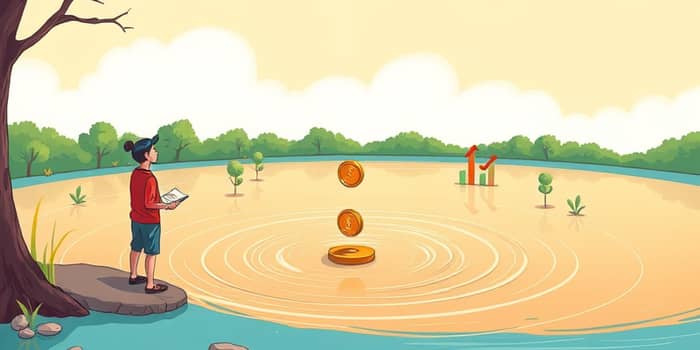
Every financial choice you make sends waves through your entire economic life, much like a pebble dropped in water. Understanding personal loans is essential for securing a stable and prosperous future.
As we navigate 2026, the personal loan landscape offers both opportunities and challenges. Elevated interest rates persist, making informed decisions more critical than ever to avoid long-term debt traps.
This guide will illuminate how personal loans interact with your credit, budget, and goals. Your credit score holds immense power in determining loan terms, and recent trends reveal its fragility in today's economy.
By delving into data and strategies, we aim to empower you to borrow responsibly. Let's explore the ripple effects that start with a single loan application.
In January 2026, personal loan rates show a slight decline but remain high historically. Average rates for 3-year loans stand at 12.91% APR, while 5-year loans average 17.68% APR.
This reflects broader economic shifts and lender risk assessments. Federal Reserve policies influence rates, but personal loan pricing is heavily tied to consumer credit risk.
Borrowers must stay vigilant as rates vary widely. Online lenders and banks compete, offering different terms based on your financial profile.
This table underscores the cost of poor credit. Improving your score can save significant money over time.
Credit scores are more than just numbers; they are gatekeepers to financial opportunities. Recent national declines highlight risks, with over 4.5 million Americans facing score drops after student loan payments resumed.
States like Missouri and Georgia saw major decreases, while Utah and North Dakota maintained stability. Delaware's average score fell from 669 to 661, linked to high debt delinquency rates.
This vulnerability affects loan approvals and rates. Hard credit inquiries reduce scores by up to 10 points temporarily, impacting your borrowing capacity.
Proactively managing your credit can mitigate these effects. Regular monitoring and timely payments are key to resilience.
Debt consolidation is the primary use for personal loans, accounting for over 65% of approved loans. This strategy simplifies payments and can lower overall interest costs.
Average disbursed amounts are $22,804 for consolidation and $20,190 for credit card refinancing. Consolidating high-interest debt into a single loan with a lower rate makes financial sense.
However, it requires discipline to avoid new debt. Loan originations reached a peak of 6.9 million in Q2 2025, indicating high demand.
Evaluate your situation carefully before consolidating. A well-planned consolidation can accelerate debt freedom.
The lender landscape is shifting, with fintech companies gaining market share. Fintech lenders now hold 53% of the market, up from 43% in early 2025.
They often offer competitive rates as low as 6-8% APR for prime borrowers. Traditional banks and credit unions still provide stability but may have stricter criteria.
This competition benefits borrowers by increasing options. Online lenders specialize in subprime lending, while banks focus on established customers.
Understand each lender's strengths to make an informed choice. Diverse options empower borrowers to shop around effectively.
To secure favorable loan terms, adopt proactive strategies. Improving your credit score is the most effective way to lower rates.
Consider adding a co-signer with better credit if yours is fair. Requesting a smaller loan amount can also increase approval chances for bad-credit borrowers.
Rate shopping within a short window minimizes credit score impact. Securing the loan with collateral might reduce rates for those with poor credit.
Implementing these tactics can lead to significant savings. Strategic borrowing aligns with long-term financial health goals.
Looking ahead, personal loan rates are projected to remain relatively stable in 2026. Average rates may dip to 11.8%, the lowest since December 2023, but uncertainty persists.
The Federal Reserve plans one rate cut, influencing broader lending environments. Delinquency rates are forecast to rise slightly, driven by macroeconomic pressures.
Americans have unprecedented home equity, making alternatives attractive. Home equity financing could be more appealing for major expenses like renovations.
Adapt to these trends to optimize your borrowing decisions. Future financial stability depends on today's smart choices.
Personal loans are powerful tools that can either propel you forward or hold you back. Every ripple starts with awareness and careful planning.
Assess your needs, compare options, and prioritize debt management. Long-term financial wellness requires balancing immediate needs with future security.
Use the insights from this article to navigate the complexities. Your financial future is shaped by the decisions you make today.
Embrace a proactive approach to borrowing. Start creating positive ripples now for a brighter tomorrow.
References